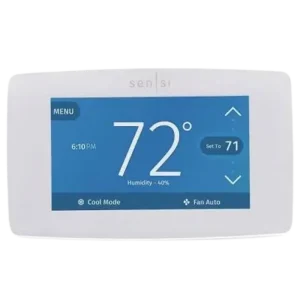
| Brand Name | Sensi |
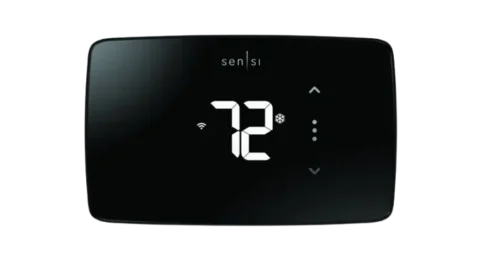
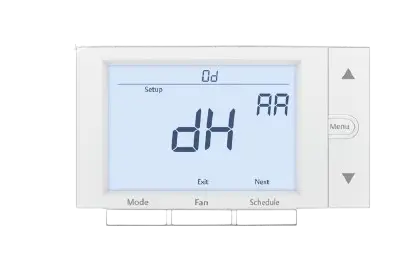
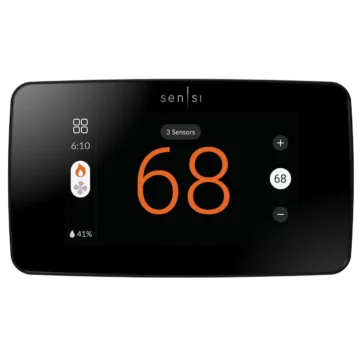
| Product Name | Sensi Touch Smart Thermostat |
| Model Number(s) | 1F95U-42WF Series, ST75 Series, NH-AWIFI, OH-AWIFI |
| File Size | 0.26 MiB |
| Number of Pages | 11 |
| Languages Covered | English |
Sensi Touch Smart Thermostat 1F95U-42WF
The Sensi Touch Smart Thermostat is a Wi-Fi-enabled thermostat installed and configured through the Sensi app. This guide applies to the 1F95U-42WF series, ST75 series, NH-AWIFI and OH-AWIFI models. The installation process covers replacing an existing thermostat, identifying and labeling HVAC wires, mounting the new base, connecting the wiring, restoring HVAC power, connecting the thermostat to Wi-Fi and registering it with a Sensi account.
A major installation requirement is a C-wire. The Sensi Touch needs continuous HVAC power through the common wire. If that connection is missing or incorrect, the touchscreen can remain blank or flash instead of operating normally.
Sensi Touch Smart Thermostat Models Covered
The installation guide applies to the following Sensi Touch models:
| Model | Product Family |
| 1F95U-42WF Series | Sensi Touch Smart Thermostat |
| ST75 Series | Sensi Touch Smart Thermostat |
| NH-AWIFI | Sensi Touch Smart Thermostat |
| OH-AWIFI | Sensi Touch Smart Thermostat |
The model number can be checked on the back of the thermostat cover.
What Is Needed Before Installation
Before starting, the official guide recommends having the following information and tools ready:
| Item | Requirement |
| Wi-Fi Network Name / SSID | Required |
| Wi-Fi Frequency | 2.4GHz |
| Wi-Fi Password | Required |
| Screwdriver | Needed during removal and mounting |
| Sensi Touch Hardware | Use the hardware packaged with the thermostat |
| Smartphone or Tablet | Needed for the Sensi app |
| Sensi App | Required for correct installation and configuration |
| C-Wire | Required for the Sensi Touch thermostat |
The official guide specifically states that the Wi-Fi network used during setup should be a 2.4GHz network.
Download the Sensi App
The Sensi app is required to install and configure the thermostat.
Before working on the thermostat wiring:
- Download the Sensi app to a smartphone or tablet.
- Open the app.
- Create a Sensi account.
- Enter a valid email address.
- Create a password and keep the login information available.
The thermostat becomes linked to the email address once it is registered. An account is also required for remote access and the full set of Sensi app features.
The guide notes that the Install a device option is specifically for HomeKit installation. Using Sensi without creating an account results in fewer available features.
Add the Sensi Touch Thermostat to the App
After signing into the Sensi app:
- Tap the plus (+) sign.
- Choose the thermostat being installed.
- Select Sensi Touch Smart Thermostat.
- Confirm that the thermostat belongs to one of the supported model families listed above.
Choose New Installation
After selecting the Sensi model, tap New Installation.
The app then asks whether the thermostat is:
- Not Mounted, or
- Is Currently Mounted.
Not Mounted
Choose Not Mounted for a normal DIY replacement installation.
This setup path walks through:
- Identifying the existing thermostat wires
- Labeling each wire
- Connecting those wires to Sensi
- Configuring the HVAC system
- Connecting the thermostat to Wi-Fi
The official guide recommends the Not Mounted option when the thermostat has not already been professionally installed.
Is Currently Mounted
Choose Is Currently Mounted when a technician has already installed the thermostat on the wall.
This setup path checks the existing Sensi wiring, confirms the HVAC configuration and then continues to Wi-Fi setup.
C-Wire Requirement
The Sensi Touch requires a C-wire.
The C-wire provides continuous 24V power to the thermostat. If the thermostat is installed without sufficient C-wire power, the touchscreen may:
- Stay completely blank
- Flash intermittently
- Fail to remain powered on
The troubleshooting section states that the small battery-powered installation light in the sub-base lasts only about an hour and does not indicate that the thermostat itself is receiving HVAC power.
Turn Off HVAC Power Before Installation
Before handling any thermostat wires, switch off power to the heating and air-conditioning system.
This should be done before removing or disconnecting the old thermostat wiring.
Remove the Old Thermostat
Remove the Existing Thermostat Cover
Depending on the old thermostat, the cover may:
- Pull straight off
- Release through a pressure latch
- Require a screwdriver
Remove it carefully so the existing wiring remains accessible.
Photograph the Existing Thermostat Wiring
Before disconnecting any wire, take a clear photograph of the current thermostat wiring.
The Sensi app prompts for this photo, and it is saved to the smartphone’s camera roll or gallery. The picture can be useful later if installation troubleshooting is required.
Remove Existing Jumper Wires
Old thermostat jumper wires should not be transferred.
The Sensi Touch has a built-in jumper, so jumper wires used on the previous thermostat are not needed.
Identify the Existing Thermostat Terminals
In the Sensi app, select every terminal label on the old thermostat that has a wire attached.
The app checks whether the selected wire configuration is valid.
The app also asks for the HVAC or furnace type so the thermostat can be configured for the connected equipment.
Label the Thermostat Wires
Use the wire-label stickers included with the thermostat.
- Identify a wire’s existing terminal.
- Apply the matching label.
- Remove the wire.
- Repeat until all connected wires are labeled.
After every wire has been labeled, remove the old thermostat base from the wall.
Mount the Sensi Touch Base
Position the new Sensi base on the wall.
Use the included mounting screws to secure it in place.
Connect the Thermostat Wires
After the base is mounted:
- Match each labeled wire with its corresponding Sensi terminal.
- Push the wire into the correct terminal slot.
- Check that the terminal paddle moves into position.
- Gently tug the wire to confirm that it is securely held.
A wire that pulls out easily has not been connected correctly.
Attach the Thermostat Display
Push the front display onto the mounted thermostat base.
If the Backlight feature was used during installation, the official guide says to set the related switch to Off so the backlight can then be controlled from the display.
Restore HVAC power after the thermostat cover is attached.
Checking a Sensi Touch That Is Already Mounted
For a professionally installed thermostat:
- Turn off HVAC power.
- Hold the thermostat with both hands.
- Pull the display straight toward the user to detach it from the base.
- Identify the terminals that contain wires.
- Confirm that a C-wire is connected.
- Select the correct heating source in the Sensi app.
- Push the display back onto the base.
- Restore HVAC power.
Sensi Touch Wiring Terminals
The wiring diagrams on page 11 show the following thermostat terminals:
| Terminal | Function Shown in the Official Wiring Diagram |
| RC | 24V power for cooling |
| RH | 24V power for heating |
| C | 24V common wire |
| Y | First-stage cooling; first-stage compressor on a heat pump |
| Y2/* | Second-stage cooling or configurable accessory function; second-stage compressor on supported heat pumps |
| W/E | First-stage heat; auxiliary/emergency heat on heat-pump systems |
| W2/* | Second-stage heat or configurable accessory function |
| G | Indoor blower / fan |
| O/B | Heat-pump reversing valve, zone panel or three-wire hot-water zone connection |
| L | Heat-pump L terminal connection |
The diagrams on page 11 separately illustrate conventional single-/multi-stage systems and heat-pump systems, showing how the same thermostat terminal can serve a different purpose depending on HVAC configuration.
Conventional HVAC Wiring
For conventional systems without a heat pump, the guide supports:
Single-Stage Systems
- AC1
- GA1
- EL1
Multi-Stage Systems
- AC2
- GA2
- EL2
The page 11 diagram shows connections for cooling power, heating power, common, first- and second-stage cooling, first- and second-stage heating, fan operation, configurable O/B/zone control and the L terminal.
Two-Transformer HVAC Systems
For systems with separate RC and RH wires from two transformers, the guide instructs the installer to clip the internal RC/RH jumper located on the back of the thermostat.
This instruction applies specifically to two-transformer configurations.
Heat Pump Wiring
The heat-pump diagram covers:
- HP1 — single-stage heat pump
- HP2 — multi-stage heat pump
The diagram identifies:
- Y as the first-stage heating/cooling compressor
- Y2/* as the second compressor stage on supported configurations
- O/B as the reversing-valve connection
- G as the indoor fan
- W/E and W2/* as auxiliary/emergency heat connections according to system staging
- C as common
- RC and RH as power connections
- L as the heat-pump L terminal
HVAC Configuration Menu
The thermostat’s HVAC configuration menu can be checked when there is a heating or cooling problem or when the installer needs to verify the equipment settings.
| Configuration Item | Available Options |
| Outdoor Equipment | AC1 / AC2 / HP1 / HP2 / None |
| Indoor Equipment | GA1 / GA2 / EL1 / EL2 / Fan |
| Reversing Valve Position | O / B / 6 / None |
| Humidifier | Yes / No |
| Dehumidifier | Yes / No |
Outdoor Equipment Settings
The guide defines the outdoor-equipment options as:
- AC1 — single-stage air-conditioning equipment
- AC2 — two-stage air-conditioning equipment
- HP1 — single-stage heat pump
- HP2 — multi-stage heat pump
- None — no applicable outdoor equipment selection
Indoor Equipment Settings
The available indoor-equipment options include:
- GA1 — single-stage gas system
- GA2 — multi-stage gas system
- EL1 — single-stage electric system
- EL2 — multi-stage electric system
- Fan — fan-only system
O/B Reversing Valve Settings
When configured as O, the reversing valve is energized during cooling. The official guide says this covers most applications.
Some manufacturers, including Rheem or Ruud, may use B, which energizes the reversing valve during heating.
For a three-wire hydronic zone system, the guide directs the installer to use the applicable zone setting described in the configuration menu.
Humidifier and Dehumidifier Settings
If a wired humidifier is connected to the thermostat, set:
Humidifier: YES
If a wired dehumidifier is connected, set:
Dehumidifier: YES.
The page 11 wiring diagram also shows configurable accessory use of the starred terminals for humidification or dehumidification functions.
How to Connect the Sensi Touch to Wi-Fi
After wiring and mounting are complete, Wi-Fi setup can begin.
Step 1: Open Wi-Fi Settings
On the thermostat:
- Tap Menu.
- Tap Wi-Fi.
Step 2: Identify the Display Version
The Sensi app asks the user to select the display option that matches the Wi-Fi menu shown on the thermostat.
Step 3: Follow the Sensi App
Continue through the app’s Wi-Fi instructions.
The exact connection process may differ depending on:
- iOS or Android
- Sensi app version
- Thermostat version
iPhone HomeKit Error
If an iPhone displays a HomeKit-related error during connection, check the Sensi app permissions and confirm that it has access to Home Data.
Name the Thermostat
After connecting it, select one of the available thermostat names or create a custom name.
Tap Next to continue.
Register the Sensi Touch Thermostat
After successful Wi-Fi connection, the app asks for thermostat registration.
Registration can use:
- Locate Me, or
- Manual entry of street address, city, state, ZIP code, country and time zone.
Contractor Information
If a registered Sensi partner professionally installed the thermostat, the contractor may enter a phone number during setup.
If no registered contractor number is available, this step can be skipped.
Select Start Using Sensi when registration is finished.
Sensi Touch Wi-Fi Troubleshooting
If the thermostat will not connect to Wi-Fi, the official guide recommends the following checks:
- Update the Sensi app to the newest available version.
- Restart the smartphone.
- Restart the router by unplugging it for a few minutes and reconnecting it.
- Check the Sensi app and phone permissions.
- Confirm that Location services are enabled.
- Allow Location and Nearby Devices permissions for Sensi.
- Try another smartphone or tablet if needed.
iPhone Wi-Fi Setup Checks
On an iPhone:
- Make sure Keychain is enabled.
- Allow Home Data access for the Sensi app.
- Turn on Location services.
- Allow Sensi the required Location and Nearby Devices permissions.
Android Wi-Fi Setup Checks
For Android devices, the guide recommends turning off the feature that automatically switches to mobile data when Wi-Fi quality is low.
Depending on the phone, this feature may be called:
- Switch to mobile data
- Smart Network Switch
- Avoid poor connections
Temporarily switching off Mobile Data completely may also help during setup.
Reconnecting After Changing the Router or Wi-Fi Password
If the router is replaced or the network password changes, the Sensi Touch must be connected to Wi-Fi again.
The exact reconnection procedure depends on the smartphone or tablet being used.
Sensi Touch Blank or Flashing Display
A blank or flashing touchscreen usually means the thermostat is not receiving enough power to turn on or stay on continuously.
No C-Wire Connected
The Sensi Touch requires a C-wire.
If there is no wire connected to C, the guide directs DIY installers to Sensi’s C-wire installation resources.
For some heat-only systems, an external transformer may also be an option.
C-Wire Is Connected but Screen Is Still Blank
If a C-wire is present:
- Confirm that it connects to C at the thermostat.
- Trace the same wire to the HVAC control board.
- Check that it connects securely to C at the control board.
- Gently tug the C-wire at the control board.
- Check all wires at the thermostat for secure terminal connections.
- Confirm that HVAC breakers are switched on.
Check C-Wire Voltage
If a voltmeter is available:
- Set it to AC voltage.
- Measure between RH or RC and C at the thermostat.
The official guide says the thermostat should receive:
20-30VAC
If the reading is below 20VAC, the thermostat will not turn on.
Accessing the Sensi Touch From Multiple Devices
Any phone or tablet signed into the same Sensi account can control thermostats registered to that account.
The guide states that there is no limit to the number of devices that can access a thermostat.
Sharing the Sensi account email address and password gives the other person access to every thermostat registered to the account, so account credentials should be shared carefully.
Forgot the Sensi Account Password
If the account password is forgotten:
- Open the Sensi app login screen.
- Tap Forgot Password.
- A temporary password is sent to the registered email address.
Installing Multiple Sensi Thermostats
More than one thermostat can be registered to the same account.
After installing the first thermostat:
- Open the Sensi app.
- Go to the main screen.
- Press the + sign.
- Follow the normal installation process for the next thermostat.
Account Settings
The Account section can be used to change account information, email preferences and the email address associated with Sensi.
According to the guide:
- iOS: Tap the person icon in the upper-right corner.
- Android: Tap the three dots in the upper-right corner.
Technical Support
For installation and thermostat troubleshooting:
Sensi Support: sensihelp.com
Technical Support Phone: (888) 605-7131
Frequently Asked Questions
Does the Sensi Touch Smart Thermostat require a C-wire?
Yes. The Sensi Touch requires a C-wire for continuous power. A missing or incorrectly connected C-wire can cause the touchscreen to remain blank or flash.
What voltage should the Sensi Touch thermostat receive?
The official troubleshooting instructions specify approximately 20-30VAC between RH or RC and C. A reading below 20VAC will prevent the thermostat from turning on.
Does the Sensi Touch thermostat require 2.4GHz Wi-Fi?
Yes. The installation checklist specifies a 2.4GHz Wi-Fi network for Sensi Touch setup.
How do you connect the Sensi Touch thermostat to Wi-Fi?
On the thermostat, tap Menu > Wi-Fi, select the display version shown in the Sensi app, then follow the app’s connection instructions. The exact steps can vary with the phone operating system, Sensi app version and thermostat version.
Why is the Sensi Touch screen blank after installation?
The thermostat is likely not receiving enough power. Check the C-wire at both the thermostat and HVAC control board, confirm the breakers are on and measure for 20-30VAC between RH/RC and C if a voltmeter is available.
What should be done if the Sensi Touch will not connect to Wi-Fi?
Update the Sensi app, restart the phone, reboot the router, check Location and device permissions and try another phone or tablet if needed. Android users may also need to disable automatic switching from Wi-Fi to mobile data during setup.
Can several phones control the same Sensi Touch thermostat?
Yes. Phones and tablets signed into the same Sensi account can control thermostats registered to that account. The official guide states that there is no limit to the number of devices that can access the thermostat.