
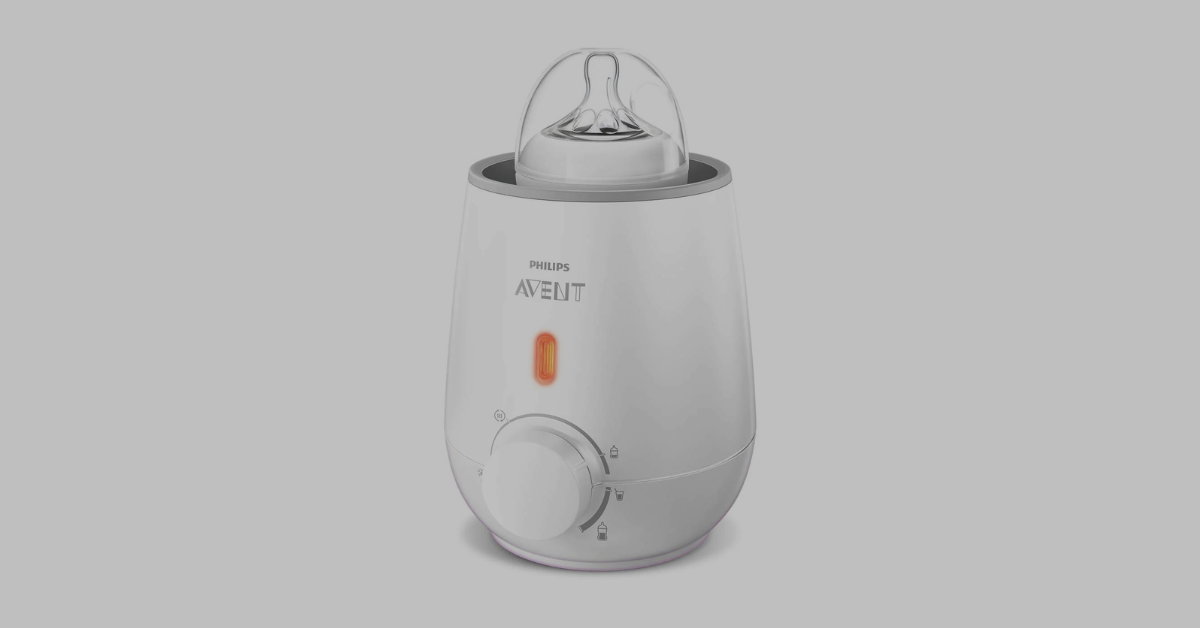
The Philips Avent bottle warmer SCF358 is made to warm feeds quickly, evenly, and with less guesswork. It can warm milk, warm baby food, keep milk warm for a short time, and defrost frozen milk or baby food containers.
Philips describes it as a “Premium Fast bottle warmer” with smart temperature control that adjusts the heating pattern for quick, even warming. The official manual also explains that the unit warms milk gently, and the water inside does not reach boiling temperature.
Product Overview
The Philips Avent bottle warmer SCF358 is built for daily feeding tasks. It works with Philips Avent bottles and with many other leading baby bottle and baby food jar brands.
Philips says it is suitable for both milk and baby food, and highlights quick warming and defrosting.
The support page also points users to official videos for warming a bottle of milk and warming milk in glass bottles, which confirms those common use cases.
The warmer has three main jobs:
- warm milk based on milk volume
- warm baby food containers
- keep milk warm or defrost frozen milk and baby food
One of the most helpful features is the smart temperature control. Philips says the sensor detects the milk’s starting temperature, warms it to the ideal temperature, and keeps it there for up to 60 minutes.
That means the unit does not just blast heat at the bottle. Instead, it follows a set warming pattern. This helps the user warm feeds with less trial and error. It also helps avoid hot spots.
Parts and Controls
The warmer includes the main warming chamber, a progress indicator, a baby food warming setting, a keep warm/defrost setting, milk volume settings, and the on/off button. These are the controls a user will deal with every day.
Here is a quick breakdown:
| Part | What It Does |
| Bottle warmer body | Holds the bottle or food container |
| Progress indicator | Shows warming progress |
| Milk volume setting | Warms milk based on amount |
| Baby food setting | Warms baby food jars or containers |
| Keep warm / defrost | Keeps milk warm or defrosts frozen milk or food |
| On / off button | Starts or stops the warming cycle |
The progress indicator matters more than it may seem at first. The manual says it flashes while warming is in progress. When the full indicator is on and no longer flashing, the milk is ready for feeding. After that, the warmer moves into keep-warm mode and later shuts off automatically after about 60 minutes.
This setup makes the product easy to use. The user does not need to count minutes by hand for most daily feeds. Instead, the light pattern does most of the work.
Settings Explained
Milk Volume Setting
This setting is for warming milk that starts at room temperature or fridge temperature. The user selects the milk amount, from 30 ml / 1 oz to 330 ml / 11 oz, and the warmer heats it to feeding temperature.
The user must choose the setting by milk volume, not by bottle size.
This setting works for:
- plastic bottles
- glass bottles
- silicone bottles, with extra warming time after the light turns solid
Baby Food Setting
This setting warms baby food containers. The manual explains that baby food can vary a lot in thickness. Because of that, the warmer cannot always judge the exact warming time on its own. The user should stir the food during warming and check the temperature before feeding.
Keep Warm / Defrost Setting
This setting covers several jobs:
- keeps already warm milk at the right temperature
- defrosts frozen milk
- defrosts frozen baby food
- warms milk bags
Philips also says the warmer keeps milk warm for up to 60 minutes and then shuts off automatically. That helps when feeding gets delayed for a short time.
How to Set Up the Bottle Warmer
Before using the warmer, the user should place it on a flat, stable indoor surface. Use it indoors only and connect it to a grounded wall socket.
The unit should stay away from hot surfaces, and the cord should not hang off the edge of a table or counter. The warmer should never be preheated.
For best results, the setup should follow the same order each time:
- Place the bottle or food container in the warmer.
- Add fresh room-temperature water up to the level of the milk or food.
- For larger volumes, fill to about 1 cm below the top of the warmer.
- Select the right setting.
- Press the power button.
This order matters. The user should always place a fully assembled bottle in the warmer before adding water, and should make sure water is added before switching the unit on.
Another Useful Point: Always use fresh room-temperature water. The troubleshooting section explains that warm or hot water can change warming time and lead to uneven results.
How to Warm Milk
Step-by-Step Milk Warming
To warm milk, place the bottle in the warmer and add drinking water to the level of the milk inside the bottle. If warming a larger amount, such as 210 ml / 7 oz, fill the water to about 1 cm below the top of the warmer.
Then choose the milk volume setting that matches the amount of milk and press the on/off button. The progress light flashes during warming.
When the full progress indicator stays on without flashing, the milk is ready. The unit then switches into keep-warm mode and shuts off automatically after about 60 minutes, including warming time.
After warming:
- press the power button to switch the unit off
- remove the bottle carefully
- swirl the milk gently
- test a few drops on the inside of the wrist before feeding
The warmer warms evenly with no hot spots, which is useful when the user wants a faster feed without uneven heating.
Recommended Settings by Container Type
| Container | Recommended Setting |
| Plastic bottle | Milk volume setting |
| Glass bottle | Milk volume setting |
| Silicone bottle | Milk volume setting + 3 to 4 extra minutes |
| Milk bag | Keep warm / defrost setting |
The silicone bottle note matters. Silicone bottles take longer, so the bottle should stay in the warmer for 3 to 4 minutes more after the full progress light turns solid.
How to Warm Milk Bags and Baby Food
Warming Milk Bags
Milk bags heat faster than bottles because the bag material transfers heat very quickly. The manual says the user should first check the milk bag instructions and make sure the bag can be warmed in a bottle warmer.
Then place the milk bag in the warmer, add water to the level of the milk, select the keep warm/defrost setting, and press the power button. When the full progress light stays on without flashing, the milk is ready.
This is one place where choosing the right setting really matters. The troubleshooting section says milk can get too hot if the user picks the wrong setting or adds too much water. Milk bags should not use the regular milk volume setting.
Warming Baby Food
To warm baby food, place the container in the warmer and add water to the level of the food. For larger amounts, the manual again says to fill to around 1 cm below the top of the warmer.
Then select the baby food setting and press the power button. The progress light flashes while the unit warms the food.
Since baby food can be thick or uneven, the user should stir it while warming and keep checking the temperature. Even after the light turns solid, the food may need more warming time.
The warmer is suitable for baby food containers and can both defrost and warm them.
How to Keep Milk Warm and Defrost Frozen Feeds
Keep Warm Function
If the milk is already warm, the keep warm / defrost setting keeps it at the right temperature. The user places the bottle in the warmer, adds water to the milk level, chooses the setting, and presses start. The progress light flashes during the cycle, then stays on when the milk is ready.
The warmer keeps the milk warm for up to 60 minutes, then shuts off automatically. Philips highlights this as a feature for mealtime flexibility.
Even so, the manual warns not to rewarm milk after it has cooled down because bacteria may start to grow.
Defrosting Frozen Milk
The keep warm / defrost setting also handles frozen milk. The manual says it works for 30 ml / 1 oz to 180 ml / 6 oz.
Place the bottle in the warmer, add water to the milk level, choose keep warm / defrost, and press start. The progress light flashes while the milk defrosts and warms.
Since frozen milk can vary in thickness, the exact time can change. The manual gives one example: 60 ml / 2 oz of frozen milk may take about 45 minutes to defrost and warm.
The warmer has a defrost function for frozen milk and baby food containers.
Defrosting Frozen Baby Food
Frozen baby food uses a two-step process:
- Defrost on the keep warm / defrost setting.
- Switch the unit off.
- Turn to the baby food setting.
- Warm the food fully.
Let’s take an example that 180 ml / 6 oz of frozen baby food may take about 60 minutes to defrost. The warmer must be switched off before turning the knob to the baby food setting, or that setting may not start correctly.
Safety Tips for Everyday Use
The safety rules in the manual are simple, but they matter. The warmer deals with water, electricity, and hot containers, so small mistakes can lead to burns or poor results.
Key safety points include:
- use the warmer indoors only
- do not immerse the cord, plug, or appliance in water
- do not preheat the unit
- always place the bottle first, then add water
- add water before switching the warmer on
- do not move the warmer when it contains hot water
- always check the milk or food temperature before feeding
- unplug the unit before cleaning
- let the warmer cool before handling or cleaning it
The manual also notes that hot water can cause serious burns. Small bottles can be especially tricky because the user may reach closer to the water when taking them out.
Another Practical Tip: If the full progress indicator is on but not flashing when the user starts another cycle, the warmer is still too hot. Switch it off and let it cool. Filling it with fresh cold water can help cool it faster.
Cleaning and Descaling
Cleaning the Unit
Philips says the warmer is designed as one piece, which makes it easier to clean. The printed manual gives the daily cleaning steps in more detail. First, unplug the warmer and let it cool down. Then pour the water out sideways, not forward or backward, so water does not spill onto the knob or main plug area.
After that, wipe the warmer with a moist cloth. Do not use abrasive cleaners, antibacterial cleaners, chemical solvents, or sharp tools.
If the warmer has been used for baby food, the user should also make sure no spilled food remains at the bottom of the chamber.
Descaling the Unit
The manual recommends descaling the warmer every four weeks.
To descale it:
- Mix 60 ml / 2 oz white vinegar with 120 ml / 4 oz cold water.
- Pour the solution into the warmer.
- Select the milk warming setting for contents under 180 ml / 6 oz.
- Let the unit run for 10 minutes.
- Leave the solution in place until all scale dissolves.
- Empty the warmer.
- Wipe the inside with a moist cloth.
- Repeat if scale remains.
The manual also says citric-acid descalers may be used, but other descaler types should not be used.
Troubleshooting
Here are the most common problems and what usually fixes them.
The progress light flashes fast and the unit turns off
This usually means:
- the water is too hot or too cold
- there is not enough water
- boil-dry protection has started
Fix: Turn the unit off, unplug it, let it cool, and refill with enough fresh room-temperature water.
The milk is too hot
Possible causes:
- wrong setting
- milk bag used on the wrong setting
- too much water added
Fix: Choose the setting by milk volume, use keep warm / defrost for milk bags, and fill only to the right water level.
The milk is still cold
Possible causes:
- wrong setting
- silicone bottle needs extra time
- warm water was used
- not enough water
- bottle placed in after the warmer was switched on
Fix: Put the bottle in first, use fresh room-temperature water, select the right milk volume, and allow silicone bottles another 3 to 4 minutes after the light turns solid.
The same milk amount warms in different times
The support page includes this as a common issue, and the manual explains why: warming time depends on the starting milk temperature and the starting water temperature.
Fix: Use enough fresh room-temperature water each time for more steady results.
Support & Official Help
The product support page for SCF358/00 includes manuals, FAQs, troubleshooting, repair help, and product registration.
It also says users can register the product to get access to manuals and tailored support. The support area includes contact support options through WhatsApp, online chat, or phone.
Official support details from the manual include:
- Support website: philips.com/support
- Phone: 1-800-54-Avent
- Warranty: full two-year warranty for model SCF358/00, handled by Philips North America LLC
FAQs
How does the Philips SCF358 work?
It warms milk or baby food by using a smart temperature control system. The user places the bottle or container in the warmer, adds room-temperature water, picks the correct setting, and presses start. The progress light flashes during warming and stays on when the feed is ready.
Can the Philips bottle warmer warm baby food?
Yes. It can warm baby food containers and also defrost frozen baby food. The user should stir the food during warming and test the temperature before feeding.
Can it defrost frozen milk?
Yes. The keep warm / defrost setting can defrost frozen milk from 30 ml / 1 oz to 180 ml / 6 oz. One example in the manual says 60 ml of frozen milk may take about 45 minutes to defrost and warm.
How long does it keep milk warm?
Philips says the warmer keeps milk warm for up to 60 minutes and then shuts off automatically.
Is it easy to clean?
Yes. Philips says the warmer is designed as one piece for easier cleaning. The manual says to unplug it, let it cool, pour out the water sideways, and wipe it with a moist cloth.
How often should it be descaled?
The manual recommends descaling the warmer every four weeks to keep it working properly.